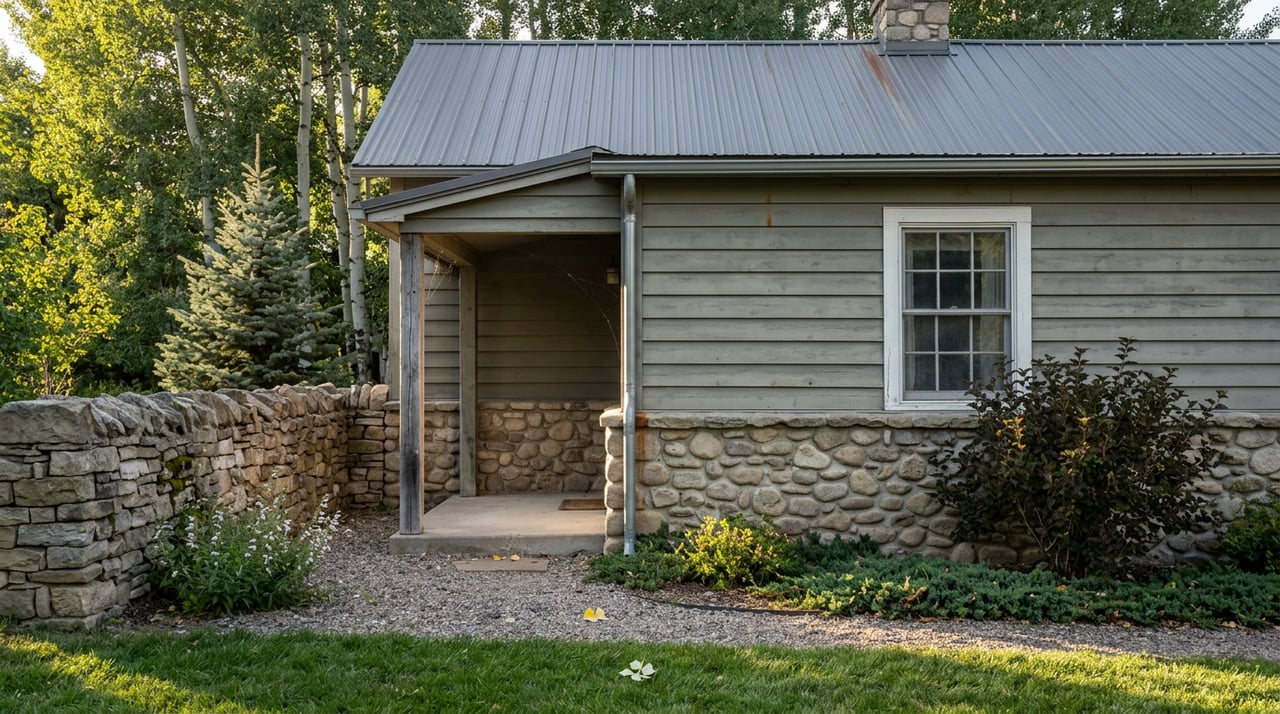
A listing agent describes a Minturn cottage as a "turnkey short-term rental," complete with an active town license and a booking calendar that stretches into next winter. To a buyer comparing it against a Vail Village condo three times the price, the math looks obvious: buy the cottage, keep the calendar running, bank the difference. The town's short-term rental rule is not really about the house at all. It is about how long you, specifically, have owned it.
That distinction, and a second one buried in Eagle County's new septic rules, are the two things a buyer or seller in Minturn or Red Cliff needs to understand before they trust a price tag to tell the whole story.
A License That Doesn't Follow the House
Minturn has regulated short-term rentals since 2017, and the town council revisited the rules again in Ordinance No. 03, Series 2025. The change was narrow but consequential: no property can be licensed as a short-term rental unless its current owner has held title for two or more years before filing the application. The only carve-out is a transfer into a trust where the original owner remains the beneficiary. An arm's-length sale does not qualify.
Council added the ownership requirement after watching a pattern repeat. Owners would buy a property, spend roughly two years working through Minturn's design review and building permit process, and receive their certificate of occupancy right around the time the two-year clock ran out, converting the home into a full-time rental almost the moment it was habitable. The 2025 amendment closes that sequencing. Minturn's business licensing rules state plainly that license fees are not transferable to new ownership. The fee to apply, set under Ordinance No. 25, Series 2023, runs $300 per bedroom, refundable minus inspection costs if the town denies the application.
There is one exception worth knowing if you plan to live in the home yourself. Council kept a provision letting an owner-occupant rent up to a third of the house immediately, without waiting out the two years. Full-house rental to visiting guests requires the tenure. A room, a lock-off unit, or an accessory space under that 33 percent threshold does not.
Why the Rule Exists
The distinction is not accidental. Minturn's own strategic plan describes a goal to preserve what it calls its "authentic small town character," and the town has separately adopted a formal Housing Action Plan aimed at keeping homes available to residents rather than absentee investors. Read against that backdrop, the ownership rule functions less like a licensing formality and more like a filter. It lets someone who lives in Minturn supplement their mortgage with a rented room right away. It asks someone buying purely for rental income to prove they intend to stay involved with the property, not just the yield, before the town extends them a license.
For a buyer running numbers on a listing that advertises current STR income, that filter matters more than the sale price. The income the seller earned does not transfer. Your own two-year clock starts at closing.
The Assumption That Doesn't Hold: Municipal Water, Not Wells
A few miles south, Red Cliff looks like the kind of historic mountain town where every home runs on a well and a septic tank. It doesn't work that way. Red Cliff operates its own municipal water and wastewater utility, complete with tap fees for connecting to the system and a wastewater treatment plant the town rebuilt after years of failing infrastructure. Minturn works the same way from the other direction: the town owns and operates its own water utility, serving roughly 1,000 people, while sewer service runs through the Eagle River Water and Sanitation District. Buy a home inside either town's boundaries and you are very likely tying into a municipal system, not permitting a private one.
That correction points the real septic story somewhere else. Inventory inside Red Cliff's historic core is thin by design as much as by demand, with active listings commonly numbering one or two at a time and an average asking price around $1,095,950 as of early June 2026. Recent examples on the market included a Victorian near the confluence of Turkey Creek and the Eagle River and a circa-1880s former schoolhouse, later used as a Neighbors of Woodcraft meeting hall, both sitting firmly within town limits and, by extension, the municipal water and sewer system. The properties where Eagle County's new septic rules actually bite sit outside that boundary, on the unincorporated land ringing both towns.
The Septic Countdown Already Running
Eagle County has just changed the rules governing every one of those systems, and the timing matters for anyone closing on unincorporated acreage just outside Minturn or Red Cliff over the next several months, the kind of parcel along Turkey Creek Road or scattered through the surrounding forest fringe that was never annexed into either town's utility district.
The county's Board of Health adopted a comprehensive update to its on-site wastewater treatment system regulations on January 20, 2026. General provisions took effect March 6, 2026, 45 days later, which means they have already been active for roughly five months as of this writing. Two other pieces of the update matter here. Every OWTS practitioner working in the county has needed an Eagle County specific license for their scope of work since that March effective date, tightening who can legally inspect, install, or repair a system. And the requirement most relevant to a home sale, a mandatory certified inspection at transfer of title, does not take effect until January 1, 2027.
The county has said openly why it built in that gap. It is using the rest of 2026 to educate the real estate community and certify enough inspectors that the new inspection requirement does not stall closings once it arrives.
| Timing | What a Sale Requires |
|---|---|
| Now through December 31, 2026 | No county-mandated inspection at transfer for unincorporated properties with an OWTS, though state disclosure rules still apply |
| January 1, 2027 onward | A certified OWTS inspection required as part of sales of unincorporated properties with an OWTS |
Skipping the inspection today does not erase a seller's obligations. KDS Homebuyers says Colorado's Seller's Property Disclosure form already requires disclosing any known septic defects, regardless of whether a county inspection is triggered. What changes on January 1, 2027 is who verifies the system's condition and when: a third party confirms it before closing, rather than the seller simply attesting to it.
What This Means If You're Closing This Year
A handful of numbers are worth carrying into any conversation about unincorporated land near Minturn or Red Cliff before year end:
- STR license application fee in Minturn: $300 per bedroom, non-transferable to a new owner
- Typical Colorado septic inspection tied to a sale: $500 to $900
- Replacing an engineered septic system on steep or rocky high-altitude terrain, common throughout the upper valley: can exceed $40,000
A seller with an aging or undocumented system has a real incentive to close before the county's inspection requirement takes hold. A buyer has the opposite incentive: ask for pumping records, permit history, and a voluntary inspection now, since you will not have the county's backstop if you close before January 1, 2027.
The Common Thread
Neither of these rules is really about affordability. Minturn's ownership requirement and Eagle County's phased septic timeline both do the same thing: they make the property's history, and your own timeline as the new owner, matter as much as the number on the listing. A price that looks like a bargain against Vail Village or Beaver Creek can still come with a two-year wait before a Minturn property can qualify for full-house STR rental, or an unincorporated parcel next door whose septic system will face a county inspection at every future sale starting in 2027.
Ben Kleimer's work in Eagle County extends beyond brokerage into local housing and climate governance in Red Cliff, which means these are not abstractions pulled from an ordinance PDF. They are the kind of details that come up in an actual closing, and they change how a buyer or seller should think about timing a purchase, structuring an offer, or pricing a listing in either town.
If you are weighing a purchase in Minturn or Red Cliff and want to understand what a specific property's ownership history and system records actually mean for your plans, Kleimer Company can walk through it with you before you write an offer, not after.
Does the two-year rule reset if I buy through an LLC I already control? Confirm the specific application language with the town before assuming an existing entity shortens the clock.
Are homes inside Minturn or Red Cliff on well and septic systems? Generally not. Both towns operate their own municipal water utilities, and sewer service runs through the Eagle River Water and Sanitation District in Minturn and the town's own wastewater utility in Red Cliff. Private wells and septic systems are far more common on the unincorporated land just outside either town's boundaries, which is where Eagle County's new inspection requirement will actually apply.
Can I just close before January 1, 2027 to avoid the septic inspection entirely? You can avoid triggering Eagle County's mandatory inspection, but the disclosure obligation described above still applies.
Does Red Cliff have its own short-term rental ordinance separate from Minturn's? Red Cliff is its own incorporated town. If rental income factors into your decision, confirm current requirements directly with Red Cliff's town clerk rather than relying on a listing's projected income, since the two towns do not share the same rulebook.
This article is general information, not legal, tax or financial advice. Consult a qualified professional about your situation.